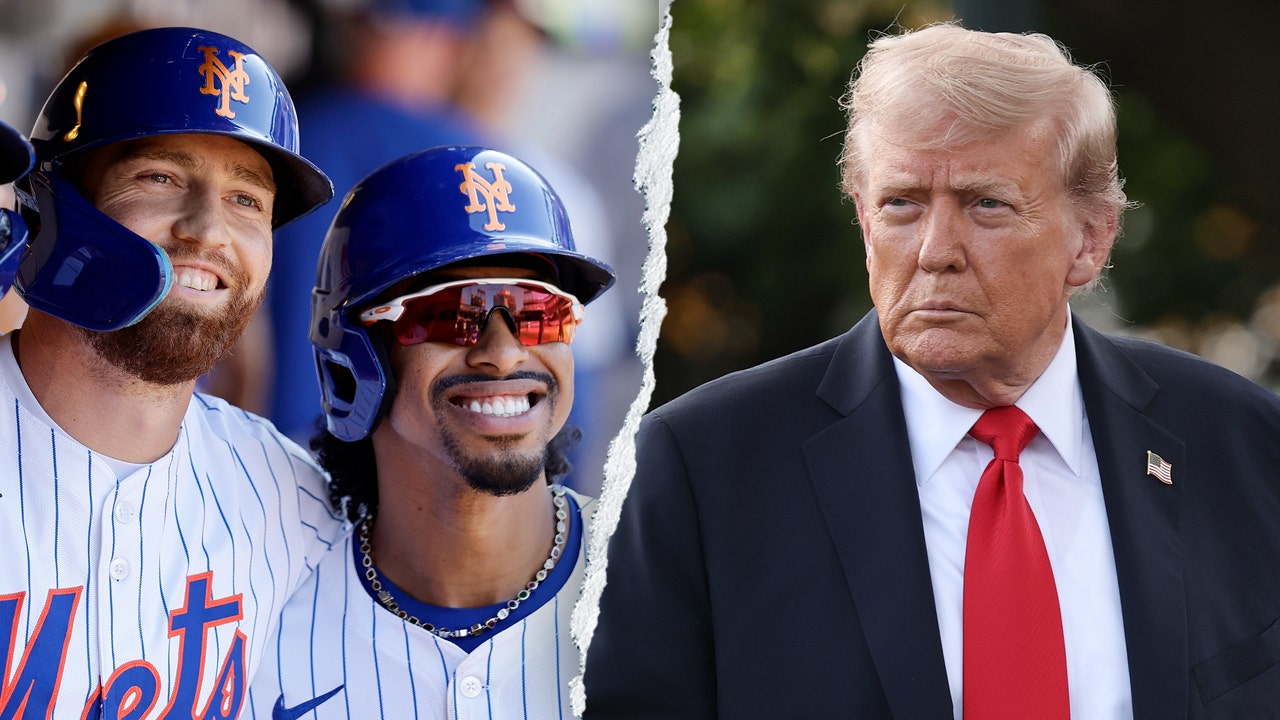
Trump Politics Split Mets Clubhouse: Lindor and Nimmo Feud Explained
The hallowed grounds of professional sports often serve as a supposed escape from the daily grind, a realm where competition and camaraderie reign supreme. Yet, even here, the deep fault lines of modern society can manifest, sometimes in the most unexpected places. This became starkly apparent with recent claims from longtime New York sports radio personality Mike Francesa, who suggested that a profound trump political split was at the heart of an alleged feud between New York Mets stars Francisco Lindor and Brandon Nimmo, ultimately impacting the team's dynamics and leading to major roster changes.
The Spark: Mike Francesa's Explosive Claim
The sports world was set abuzz when Mike Francesa, a voice synonymous with New York athletics for decades, revealed on his podcast that political differences, specifically differing views on former President Donald Trump, allegedly ignited tension within the Mets clubhouse. According to Francesa, the source of the friction between star shortstop Francisco Lindor and now-departed outfielder Brandon Nimmo was not related to on-field performance or typical locker room squabbles, but rather a deep-seated trump political split. "The Nimmo-Lindor thing, my understanding, was political, had to do with Trump," Francesa stated, adding, "One side liked Trump, one side didn't like Trump."
This claim immediately struck a chord with Mets fans, many of whom had long speculated about underlying tensions within the team but had never considered politics as the primary catalyst. Francesa emphasized the lingering nature of the disagreement, suggesting it profoundly affected the relationship between the two key players. While the specific political leanings of each player were not detailed, the mere suggestion of such a divide underscores how deeply political ideologies have permeated various aspects of American life, even reaching the confines of a professional sports locker room. The revelation ignited a fervent debate, forcing fans and analysts alike to reconsider the unseen forces that can influence team chemistry and performance.
Beyond the Dugout: Unpacking the Nimmo Trade and Mets Offseason Chaos
Francesa's allegations gained significant traction, especially in light of Brandon Nimmo's recent trade to the Texas Rangers on November 23. Nimmo, a 32-year-old outfielder coming off a career-high 25 home run season, waived his no-trade clause in what was officially framed as a strategic baseball decision. In exchange, the Mets acquired 35-year-old second baseman Marcus Semien, who hit 15 home runs in 2025.
While the Mets front office maintained the move was purely about optimizing the roster, Francesa's comments added a compelling, albeit speculative, layer to the narrative. Was the trade a purely transactional move, or did internal dynamics, potentially stemming from a trump political split, play a role in facilitating Nimmo's departure? Such questions linger, highlighting the complexity of managing a professional sports team where player personalities and external factors can be as influential as on-field statistics.
Nimmo's exit is just one piece of a chaotic and pivotal offseason for the Mets. The team has also seen the departures of other long-standing fan favorites and core players, including first baseman Pete Alonso and closer Edwin Diaz. All three—Nimmo, Alonso, and Diaz—were central figures in the Mets' recent successes, anchoring playoff runs in 2022 and 2024 and forming the core of the franchise since 2020. Their collective exodus has raised significant questions about the direction of the franchise. Are the Mets entering a full-scale reset, or were these moves, in part, influenced by unseen fractures within the clubhouse, perhaps exacerbated by a broader trump political split that extended beyond just Lindor and Nimmo?
The Broader Landscape: Politics Permeating Professional Sports
The alleged Lindor-Nimmo feud, driven by a trump political split, is not an isolated incident but rather a microcosm of a larger trend: the increasing visibility of politics in professional sports. Over the past decade, political discourse has seeped into every corner of public life, and the locker room is no exception. From player activism surrounding social justice issues to debates over national anthems and political endorsements, athletes and sports organizations are increasingly finding themselves at the intersection of sports and politics.
The Trump presidency, in particular, proved to be a significant flashpoint, polarizing public opinion and often drawing stark lines between supporters and detractors. This intense national division inevitably found its way into team environments, where individuals from diverse backgrounds are brought together under a shared professional goal. As detailed in articles like How Trump's Politics Are Dividing Professional Sports Locker Rooms, team chemistry, once primarily about on-field synergy, now often has to contend with deeply held, and sometimes conflicting, political beliefs.
This reality presents significant challenges for team management, coaches, and players alike. How do you foster unity and a common purpose when fundamental disagreements on political and social issues divide your roster? The ideal of "leaving politics at the door" has become increasingly difficult, if not impossible, in a hyper-connected world where players are also public figures with platforms and personal convictions.
Navigating Political Divides in Team Environments: Tips for Management and Players
For sports organizations and individual athletes, navigating a potential trump political split or any other political division requires proactive strategies and a commitment to communication:
- Foster Open Dialogue (with boundaries): While avoiding political discussions entirely may be unrealistic, creating safe spaces for respectful dialogue, facilitated by professional mediators if necessary, can help air grievances and build understanding without allowing animosity to fester.
- Emphasize Shared Goals: Remind everyone that despite personal differences, the team's ultimate objective (winning championships, supporting teammates) must always take precedence. Professionalism dictates that personal views should not impede collective performance.
- Establish a Code of Conduct: Clear guidelines regarding respectful communication, tolerance for differing views, and appropriate behavior (both on and off the field) can help prevent political disagreements from escalating into personal attacks or disruptive behavior.
- Lead by Example: Coaches, captains, and veteran players hold significant influence. Their ability to model respect, focus on team unity, and de-escalate tensions can set the tone for the entire clubhouse.
- Prioritize Mental Health Support: The pressure of professional sports, combined with external political pressures, can take a toll. Providing access to mental health professionals who can help players navigate these complex emotions is crucial.
"Split-Screen America" in the Clubhouse: A Microcosm of a Nation Divided
The alleged trump political split within the Mets clubhouse serves as a vivid example of what has been termed "Split-Screen America." This phenomenon describes a society where individuals can exist in vastly different information ecosystems, consuming different news, holding different fundamental beliefs, and thus experiencing entirely different realities. As explored in Split-Screen America: The Trump Effect on National Political Divides, this ideological chasm has grown wider, making common ground increasingly elusive.
When these divergent realities collide in an intimate, high-pressure environment like a professional sports locker room, the potential for conflict is substantial. Athletes, like any other segment of the population, come from diverse backgrounds with varied life experiences, which naturally inform their political viewpoints. The intensity of modern political discourse means that these views are often deeply personal and not easily set aside. Thus, the clubhouse becomes a micro-representation of the nation's broader political landscape, where even shared professional goals can sometimes struggle to bridge fundamental ideological gaps.
The challenge for sports teams, then, is not just to manage personalities but to effectively manage differing worldviews, ensuring that the passion for the game remains stronger than the passion for politics.
Mike Francesa's claim regarding a trump political split within the New York Mets clubhouse between Francisco Lindor and Brandon Nimmo has undoubtedly ignited a firestorm of discussion. While the full extent and veracity of the claim may never be officially confirmed, it undeniably highlights the increasing interwoven nature of politics and professional sports. The alleged feud, coupled with Nimmo's trade and the Mets' chaotic offseason, serves as a poignant reminder that even in the pursuit of athletic excellence, the deep political divisions of society can play an unexpected and significant role, impacting team chemistry, roster decisions, and the very direction of a franchise.